
Guitar tuition
Guitar Lessons That Fit Around Your Week
Acoustic and electric tuition for beginners, adult returners, and hobby players — face to face in London or over video, planned around the songs you actually want to play.
A studio for people who want to play songs, not admire the guitar
Fretwork Guitar Tuition is a UK studio for beginners, adult returners, and hobby players. We teach acoustic and electric guitar, either face to face or over video, and every lesson plan is built around what you want to play. The first step is a conversation rather than a sales pitch: tell us your experience level and what you would like to work on, and we will suggest the format that fits.
You will not find lesson prices listed here. The cost depends on format, session length, and how often you want to come, so the studio confirms it with you directly once we know what you need. There is no card checkout on this site and no obligation to book after the first reply.
Where we teach
12 Denmark StreetLondon, WC2H 8LS
United Kingdom
Mon–Fri 10:00–20:00 · Sat 10:00–17:00 · Sun closed
What a first block of lessons looks like
A beginner's first block usually runs across four to six weeks, and the goal is simple: get you playing something recognisable. Week one covers holding the guitar, fretting cleanly, and strumming without tension. Within a few sessions most students are changing between two or three open chords and playing along to a slow song.
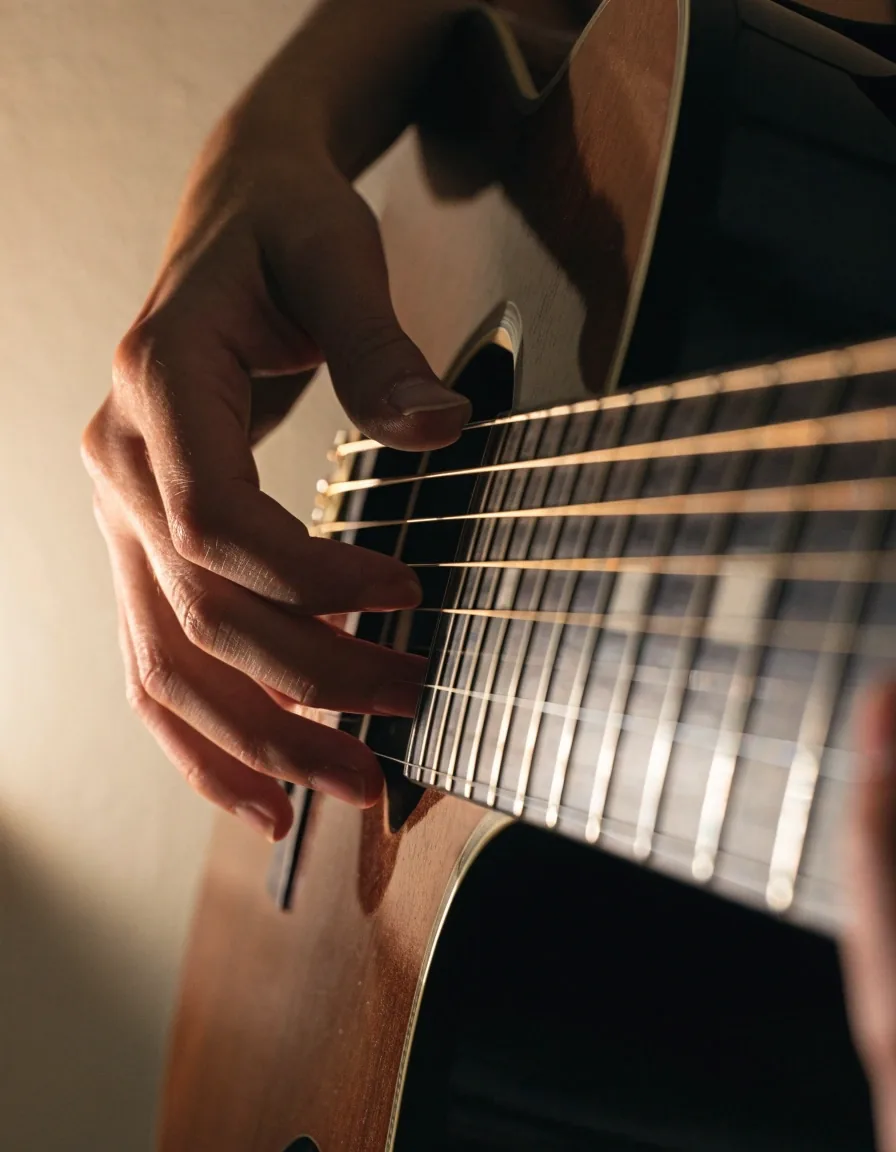
Open chords in the first few weeks
Weeks one and two
Posture, pick grip, fretting without buzzing, and your first clean strum. Short daily practice matters more than long sessions here.
Weeks three to six
Changing between two or three open chords without stopping, and playing along to a slow song end to end. Timing gets attention before speed does.
If you have played before
The first lesson is spent finding out where you actually are — chords, rhythm, reading, or songs — then the plan starts from there rather than from week one.
We do not rush past the basics to look impressive, because sloppy chord changes are the reason a lot of people quietly give up in month two. Getting two chords to land cleanly and on time is a real skill, and it is worth the extra fortnight.
Face-to-face or online: both work
Face-to-face guitar lessons suit students who want hands-on correction of posture, pick grip, and finger placement, and they work well for younger learners who focus better away from home screens. Online tuition runs over video with the same structure: you play, we listen, we adjust. Online tends to suit adults juggling work and family, and it removes travel time from the equation entirely.
Whichever you pick, you get the same lesson plan, the same written practice notes, and the same follow-up between sessions. Some students switch between the two depending on the month, and that is fine — tell us at the start of a block and we will plan around it.
Acoustic or electric to start?
There is no single right answer, and anyone who tells you otherwise is usually selling something. Acoustic guitars are louder unplugged, which makes daily practice easier, and they are forgiving on the hand for basic strumming. Electric guitars have lighter strings and a slimmer neck, which many beginners find easier on the fingertips, and they make it simpler to practise quietly through headphones.
The better question is which one you will actually pick up. If you already own one, start there. If you are buying, bring your shortlist to the first lesson and we will talk through it before you commit.
Acoustic
Loud enough to practise anywhere
A good default for strumming, singing along, and playing with other people. Heavier strings build fingertip strength quickly, which is uncomfortable for the first week and useful after that.
Electric
Easier under the fingers, quiet through headphones
Lighter strings and a slimmer neck suit smaller hands, and an amp or interface lets you practise at night without disturbing anyone. Soloing and barre chords arrive with less fight.
What a typical session includes
A 30-minute session with a complete beginner focuses on one skill at a time, with plenty of repetition and no theory detour. Longer sessions let us split the time: warm-up and technique first, then work on a song or a chord progression, then a short block on music theory tied to what you have just played.
Every lesson ends with written practice notes, so you know exactly what to do between sessions. For students working toward graded exams, the balance shifts toward exam repertoire and sight-reading, but it is still built on the same routine.
Inside a longer session
- Warm-up and technique Finger warm-ups, picking accuracy, and a short drill on whatever was shaky last week.
- Song or progression work The main block: a song you chose, or a chord progression that unlocks the next dozen songs.
- Theory tied to what you played Short and practical — why those chords work together, how to count the rhythm, what key you are in.
- Written practice notes What to do between sessions, how long, and what to leave alone until next time.

How much practice is realistic
Fifteen focused minutes a day beats a two-hour cram the night before your lesson, and it is not close. Most adults can hold 15 to 20 minutes on a weekday, and beginners should aim for four or five short sessions rather than one long one. We will help you set a realistic weekly target in the first month, then adjust it once the habit is in place.
Nobody is checking up on you, but students who practise little and expect fast progress tend to be disappointed, and we would rather say that early than let it become a surprise in week eight.
Adults are welcome, and common
The studio teaches plenty of adults who last touched a guitar in their teens, and plenty who never touched one at all. There is no age limit on learning an instrument, and adults usually progress faster than they expect because they can follow written instructions and correct themselves between sessions. The main obstacle is not ability, it is schedule.
That is why lessons can be booked weekly, fortnightly, or in short blocks around a specific goal, and why online tuition exists as an option for people whose weeks will not sit still. You do not need to have played before to walk in.
Adults often move quickly through the early stages because they can follow written notes and correct themselves.
From the studio's first-lesson notes
Group lessons and shared slots
Not everyone wants one-to-one attention, and not everyone needs it. Group sessions work well for friends, couples, and family members who want to learn together at a similar level, and the social side keeps some students practising when motivation dips. Group lessons typically cover chords, scales, technical drills, and chord progressions, with the tutor moving around the room.
They are less suited to exam preparation or to players with very specific goals, and we will say so if one-to-one would serve you better. Mixed-ability groups are a compromise, not a shortcut.
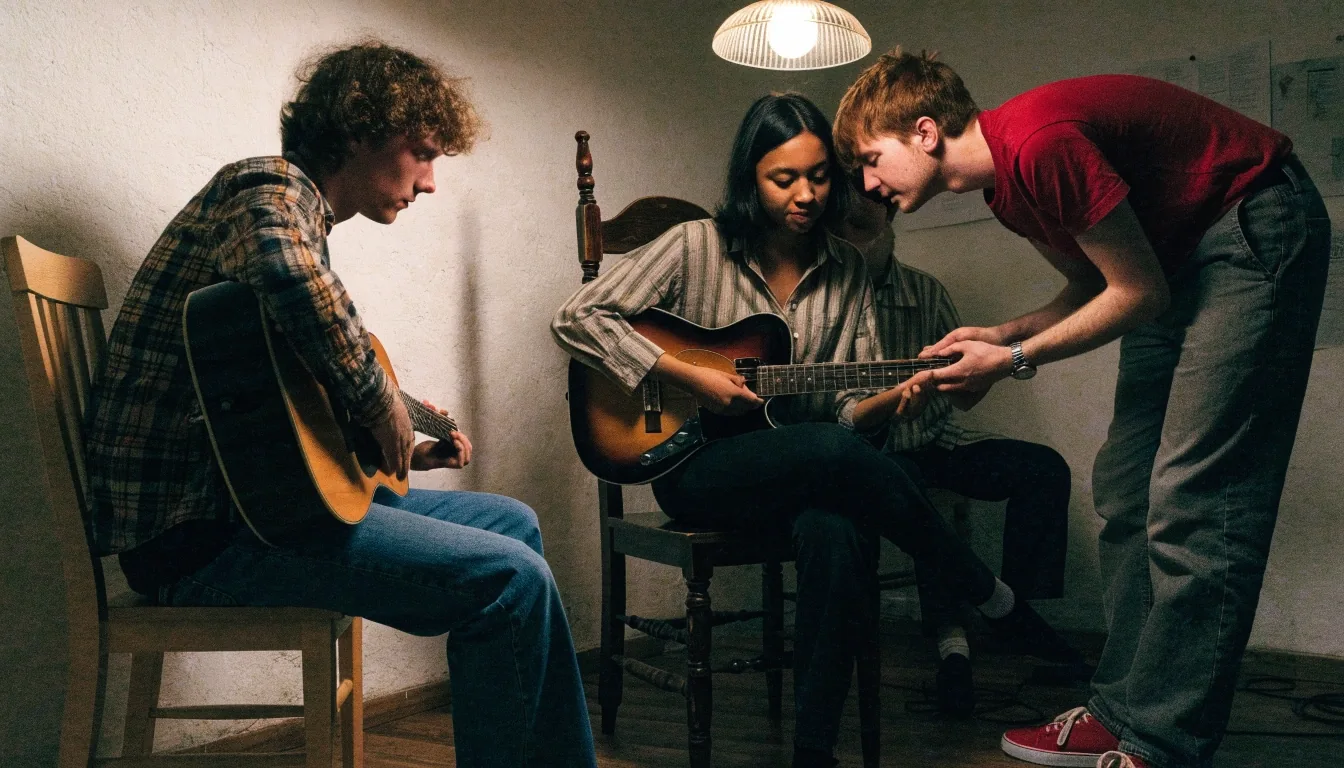
Shared slots for friends, couples, and family
Where exam boards fit in
Some students arrive wanting a graded route, and that is fine. Trinity College London and ABRSM are the boards UK teachers most often prepare students for, and Rockschool is popular with players who want contemporary graded performance exams rather than classical repertoire. Exams give structure and a deadline, which helps some learners stay on track, and they give you a clear record of what you have covered.
They are not compulsory, and plenty of students play for years without sitting a single grade. We will discuss whether an exam path suits your goals, not push you toward one. If you want to work on songs only, that is a complete plan.
Trinity College London
Graded exams across classical, acoustic, and rock styles, with a strong sight-reading and technical-work component.
ABRSM
The most widely taken board in the UK. Useful if you want a familiar benchmark or you already read music from school.
Rockschool
Contemporary graded performance exams, built around playing real songs and band-style repertoire rather than classical pieces.
Practical tools that support lessons
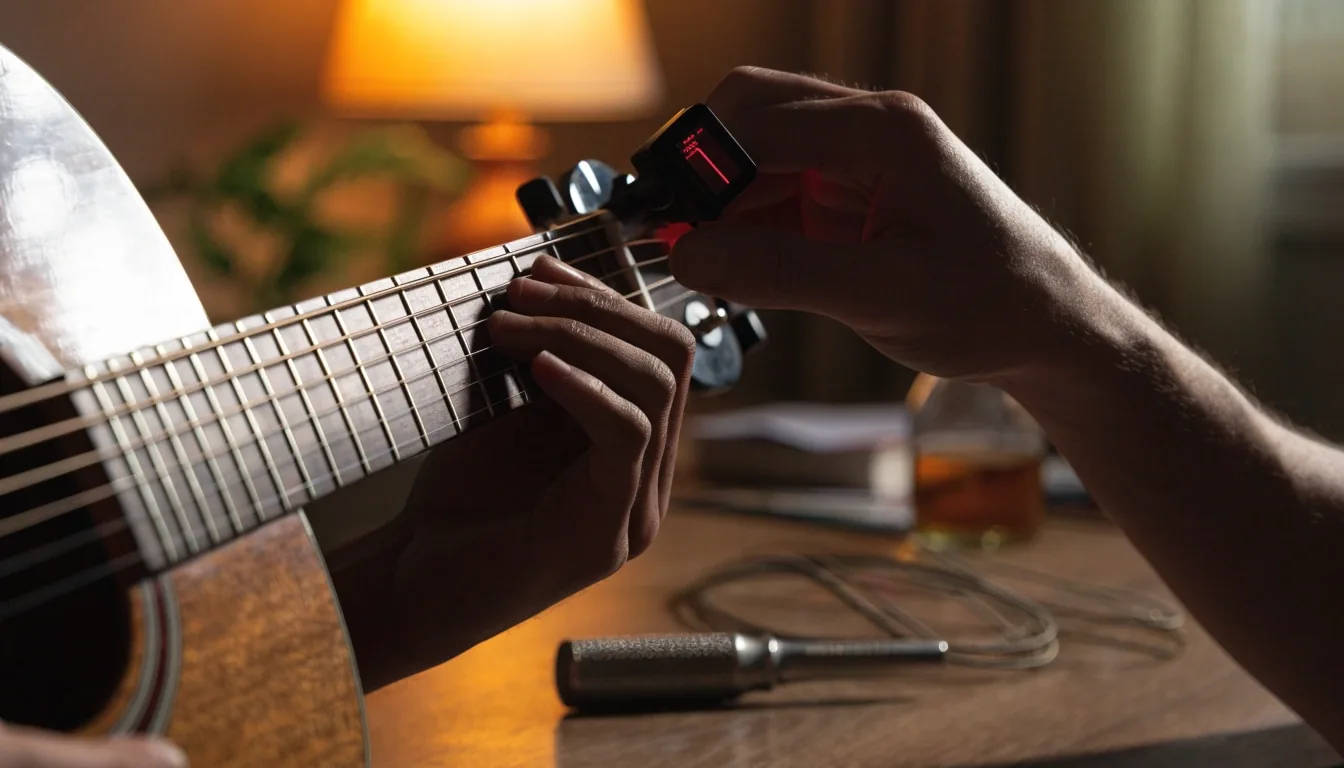
You do not need much to start: a guitar, a tuner, a spare set of strings, and somewhere quiet to practise covers it. Method books and apps can help between lessons, and we will point you toward ones that fit what you are working on rather than the newest thing on the app store.
Bring whatever you are already using to the first lesson. If you are using an app, we will look at it with you and tell you which parts of it are worth your time for where you are now, and which parts are getting in the way.
How lessons are arranged
You send an enquiry through the contact form with your experience level, the format you are interested in, and roughly when you are free. We reply with availability and a proposed lesson plan, then agree a start date. Payment is arranged directly once the format and frequency are agreed, and there is no card checkout on this site.
If you are unsure which format suits you, say so in the message and we will make a recommendation. There is no obligation to book after the initial reply.
Mon–Fri 10:00–20:00
Sat 10:00–17:00
Sun closed
Send a lesson enquiry
Tell us what you want to play, your experience level, and the format you are interested in — face to face in London or online over video. We will reply with availability and a proposed lesson plan, and you can decide from there with no obligation to book.
Questions people ask first
Short answers to the things that come up most often before a first lesson. If yours is not here, put it in the enquiry and we will answer it directly.
Do I need my own guitar before the first lesson?
Ideally, yes, because most of the early work happens on your own instrument between lessons. If you are still deciding what to buy, tell us in the enquiry and we will factor that into the first session.
Can I learn as an adult with no musical background?
Yes, and it is a large part of what the studio teaches. Adults often move quickly through the early stages because they can follow written notes and correct themselves.
How do I choose between online and in-person lessons?
Pick the format you will realistically turn up to. In-person suits students who want hands-on correction and younger learners; online suits busy adults and anyone without a local tutor.
Why are prices not listed?
Lesson cost depends on format, session length, and frequency, so the studio confirms it directly once we know what you need. The enquiry form is the starting point.
How quickly will I be playing songs?
Most beginners are playing a simple two or three chord song within the first few weeks, assuming regular short practice. Speed varies, and we will not promise a specific timeline.
Tell us what you want to play
Send an enquiry with your experience level, the format you are interested in, and roughly when you are free. We will reply with availability and a proposed plan, then agree a start date — no card checkout, no obligation to book, no prices published here.